
Running a Sex Offender Check in Santa Rosa County
The official starting point is the Florida Sexual Offenders and Predators Search. FDLE manages this free statewide system. A person can search Santa Rosa County by name, county, city, ZIP code, a street-centered neighborhood search, campus association, or an Internet identifier. The map and list are two views of the same state registry data, not separate local and state lists.
Begin with the narrowest facts known. A full legal name helps with a person search, while an exact street address is more useful for neighborhood awareness. Open the flyer and compare aliases, photograph, physical description, designation, qualifying offense, and address. FDLE expressly warns that only fingerprints establish positive identity, so a similar name or appearance is not enough for a firm identification.
Santa Rosa Sexual Offender and Predator Designations
Florida uses two public legal labels: Sexual Offender and Sexual Predator. It does not present Santa Rosa County registry results as public Tier I, Tier II, or Tier III risk rankings. Sexual predator status generally follows a qualifying conviction plus a written court designation, or a specified civil-commitment basis. Neither label should be described as an FDLE risk score.
A listing confirms that Florida registration law applies. It does not show the person's whole criminal history, and it does not mean that every offense, filing, or later court event appears on the flyer. When the conviction county link points to Santa Rosa, the underlying filed case is held by the Santa Rosa Clerk. That court file can add the docket and disposition context the registry flyer does not attempt to provide.
Searching the Florida Sexual Offenders and Predators Search
The FDLE portal offers several search modes, so the right route depends on the question. A name search looks for a known person. County, city, and ZIP filters build a local list. Neighborhood Search centers a map around a verified address. Campus Search covers qualifying university or campus associations, while Internet Identifier Search checks an email or other identifier covered by the system.
- Open the official FDLE registry and select the search mode that matches the facts available.
- Enter a full or partial name, choose Santa Rosa County, or supply a verified address for a proximity search.
- Compare the map or list results without assuming that a name match identifies the correct person.
- Open the FDLE flyer and review designation, aliases, photograph, address type, offense, status, and reporting details together.
| Field Label | Type | Required | Notes |
|---|---|---|---|
| First and last name | Text | Name criterion | Aliases and previous names may help resolve a match. |
| County, city, or ZIP | Geographic filters | Optional | Select Santa Rosa or a local place to narrow the list. |
| Street address, city, state, ZIP | Text and selections | Address criterion | Centers the Neighborhood Search map around an address. |
| University or campus | Search mode | Mode dependent | Finds qualifying campus associations. |
| Internet identifier | Search mode | Mode dependent | Checks a covered email or Internet identifier. |
| Map or list | Result view | No | Switches the presentation without creating a new record source. |
The FDLE search interface shown in the manifest capture makes these distinct modes visible before a search begins.
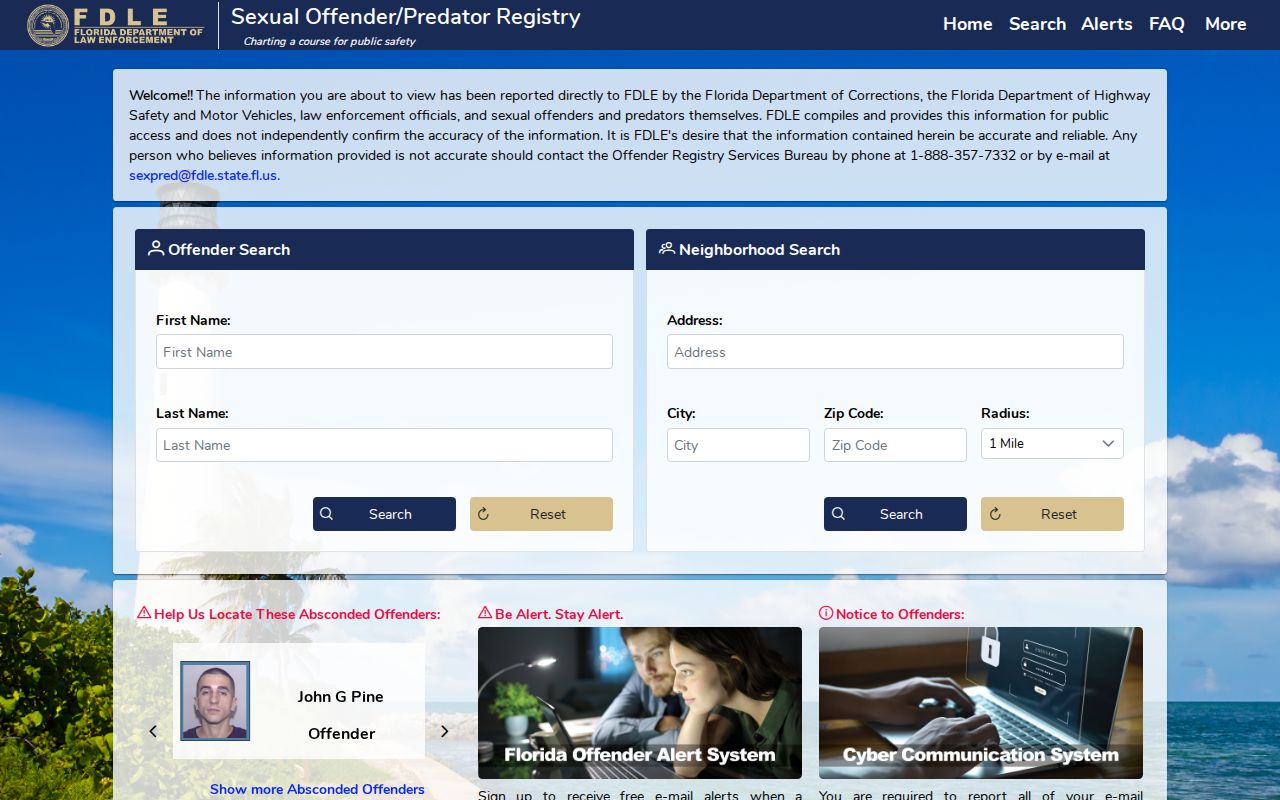
Using the mode that fits the known facts reduces false matches and makes a Santa Rosa County registry review easier to verify.
Santa Rosa Neighborhood Search and Offender Alerts
Neighborhood Search is the practical choice when the concern is a Santa Rosa County address rather than a known name. Enter and verify the location, review both the map and list, then open individual flyers instead of relying on map pins alone. Geocoding and address updates can affect placement, so the flyer remains the key record.
The Florida Offender Alert System lets a user save a location and receive notice when a registrant moves near it. A user may also follow a selected registrant for a location change. Alerts are a monitoring aid, not proof that a person is currently present at a location. Reopen the current FDLE record whenever an alert arrives because registry data may change quickly.
What a Santa Rosa Registry Profile Shows
An FDLE flyer joins identity, address, legal designation, and qualifying-offense fields in one profile. Read the fields as a group. One item by itself, especially a common name, approximate age, or map point, cannot establish identity. The conviction-jurisdiction link can help locate the court that holds the underlying case.
| Name & Aliases | Legal name plus aliases or earlier names reported for registry purposes. |
|---|---|
| Photo & Physical Description | Photograph, race, sex, height, weight, hair and eye color, and scars, marks, or tattoos. |
| Registered Address | Permanent, temporary, or transient address information made public by Florida law. |
| Offense & Conviction | Qualifying offense with conviction jurisdiction and date, including a county link when available. |
| Designation & Status | Florida's Sexual Offender or Sexual Predator label and current registry status. |
| Other Public Fields | Vehicle, vessel, Internet-identifier, incarceration, supervision, and reporting information when public by law. |
The FDLE registry FAQ explains the definitions and reporting fields behind these public flyers.
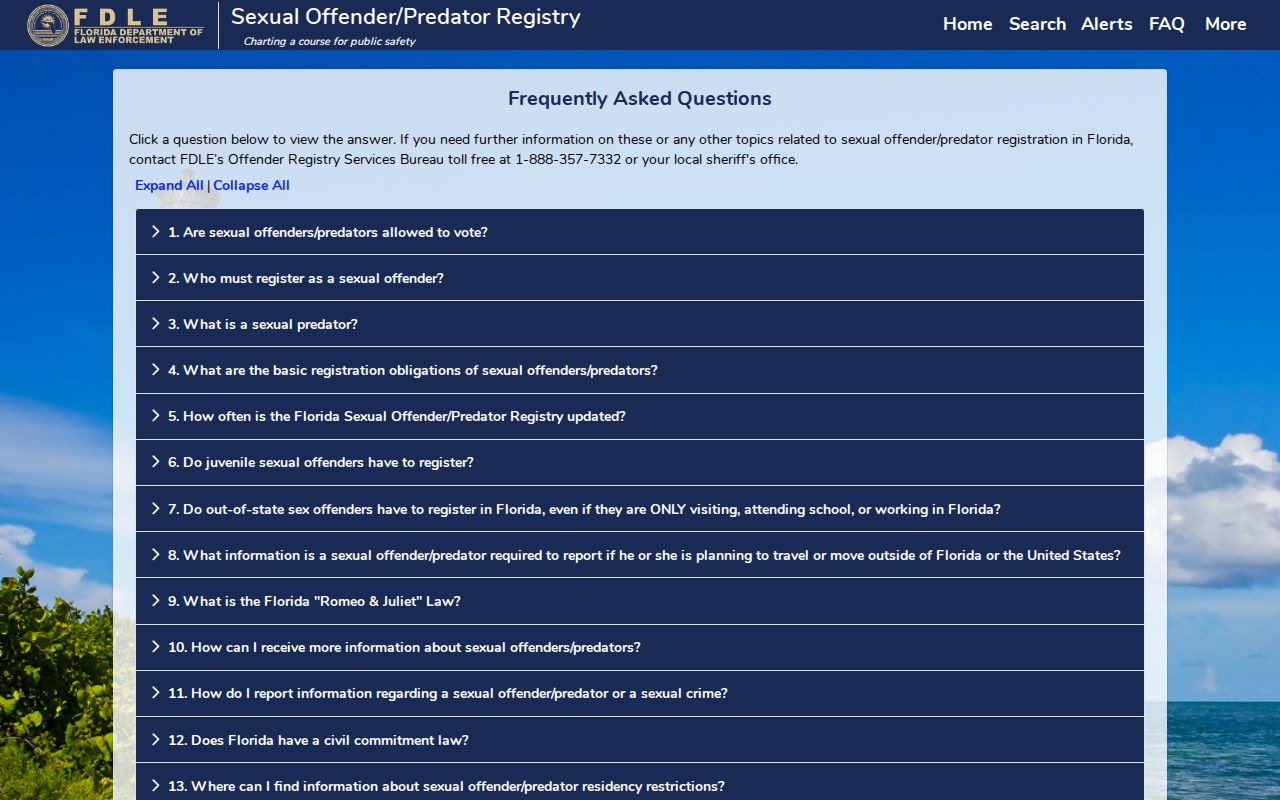
That official explanation helps separate a statutory designation from assumptions about risk or a person's complete history.
Confirming a Santa Rosa Registry Identity
A close name match is only a lead. Compare the photograph, aliases, date-related details shown, physical description, marks, address type, and conviction jurisdiction. A flyer may change after a move or a correction, so save the record date and return to FDLE for the current version rather than treating an old capture as final.
FDLE states that fingerprints are the only positive means of identification. The registry itself is not a fingerprint-comparison service, and a public user should not infer certainty from name and appearance alone. If a profile appears inaccurate, use FDLE's registry contact channel at sexpred@fdle.state.fl.us or call 1-888-357-7332 so the maintaining agency can review it.
Registration Requirements and Levels in Florida
Florida's public framework combines legal designations with reporting groups. It should not be converted into invented numbered tiers. Registration is generally for life, although a limited statutory petition route may exist after 25 sanction-free years for an eligible sexual offender. Exact eligibility depends on the statute and record, not simply the passage of time.
| Florida group | Duration | Reporting note |
|---|---|---|
| Sexual Offender | Generally lifetime | Default renewal may be twice yearly; a limited petition route may apply after 25 eligible sanction-free years. |
| Sexual Predator | Lifetime | Court designation or specified legal basis; in-person reporting duties apply. |
| Twice-yearly reporter | While registration applies | Birthday month and the sixth month, subject to current statute and FDLE instructions. |
| Quarterly reporter | While registration applies | Specified offenses or designations require four in-person reports each year. |
Cross-State Searches From Santa Rosa County
The National Sex Offender Public Website adds a federal search layer when a person or address may connect to more than one state, territory, tribe, or the District of Columbia. NSOPW gathers results from participating jurisdictions, but the originating jurisdiction remains the source for the live profile and its definitions.
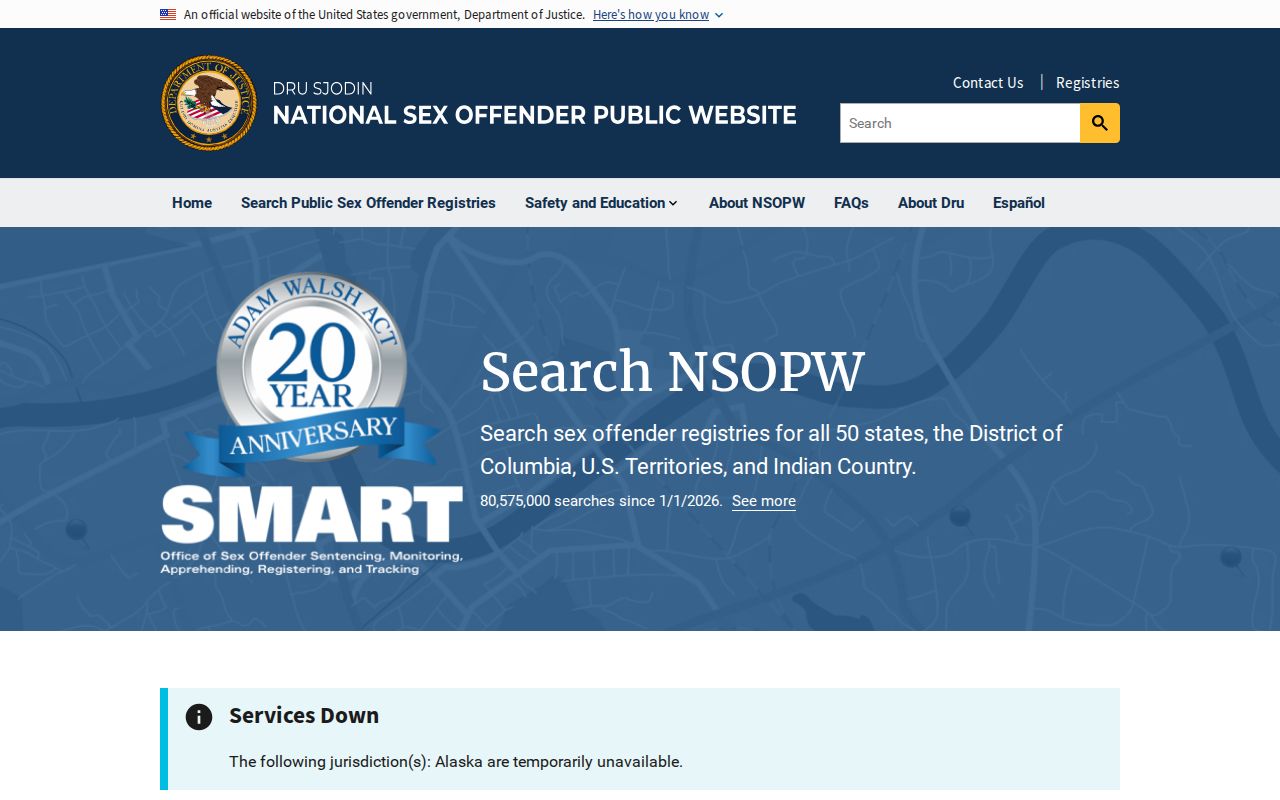
For a result tied to Santa Rosa County, follow the national result back to FDLE and use Florida's designation and reporting language.
Reporting Suspected Noncompliance in Santa Rosa County
Do not confront a listed person or attempt to investigate registration compliance. If current facts suggest a possible reporting violation, give the local law-enforcement agency the location, time, and observed facts. In unincorporated Santa Rosa County, route the report to the Santa Rosa County Sheriff's Office. Within a city, the city police department may be the first contact, while emergencies always use 911.
Questions about the registry record itself belong with FDLE at 1-888-357-7332 or sexpred@fdle.state.fl.us. That distinction matters: local law enforcement investigates suspected conduct, while FDLE maintains the statewide public record. A stale address or apparent mismatch should be reported for review, not presented publicly as proof of a new offense.
Lawful Use and Santa Rosa Community Notification
The registry and alert system support informed personal, family, and neighborhood safety choices. Use current official data, confirm identity carefully, and recognize that a map point does not authorize contact, surveillance, threats, or public claims beyond the record. Florida law also addresses alteration and false presentation of registry information.
Registry misuse is unlawful: Section 775.21(10)(d), Florida Statutes, prohibits specified misuse, including seeking payment from a registrant, knowingly publishing false information as public-record information, or materially altering registry data to misrepresent it. Never harass, threaten, intimidate, or confront a registrant or household.